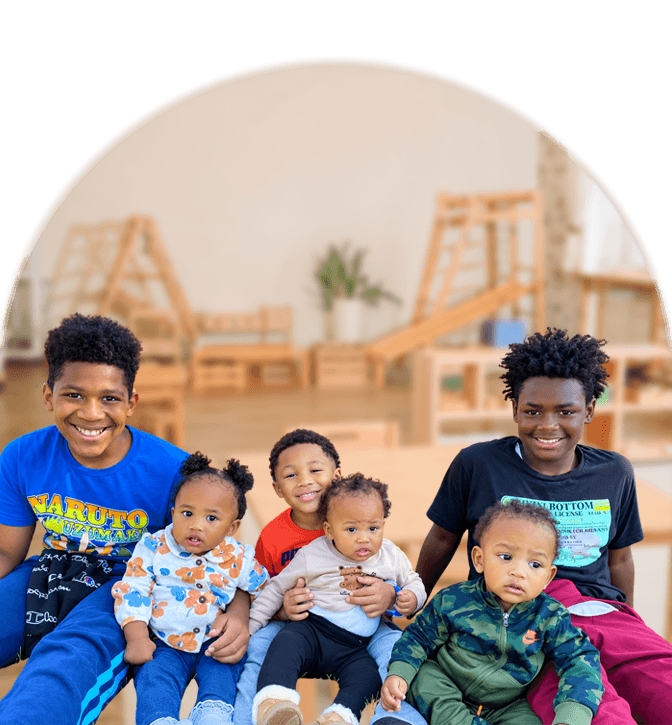
We offer a mixed-age family childcare environment where children of different ages learn, grow, and build meaningful relationships together. In this setting, younger children benefit from observing and learning alongside older peers, while older children strengthen their leadership, patience, and confidence.
Our Approach
Care and Learning at Every Stage
Care and Learning at Every Stage
From infancy through school age, children learn, grow, and thrive through nurturing relationships, hands-on experiences, and play-based learning designed to support every stage of development. Our mixed-age environment encourages children to learn from one another while building confidence, independence, and meaningful connections. Each experience is thoughtfully planned to meet children where they are and help them develop the skills they need for future success.
Infants (4 weeks – 12 months)
Our infant program focuses on building secure relationships, trust, and comfort through responsive care. Infants follow their own schedules while being supported through sensory experiences, language development, movement, exploration, and nurturing interactions.
Toddlers (1 – 2 years)
Toddlers are encouraged to explore, discover, and build independence through hands-on activities. We focus on language development, social skills, emotional expression, self-help skills, creativity, and learning through everyday experiences.
Preschool (3 – 5 years)
Our preschool experiences prepare children for school while allowing them to learn naturally through play and exploration. Children build early literacy, math, problem-solving skills, creativity, independence, and social-emotional skills through meaningful activities.
*Eligible 4-year-olds may qualify for our FREE Get Kids Ready School Readiness Program.
School Age (6 – 14 years)
Our school-age program provides a supportive space where children can relax, connect, and continue growing outside of school hours. We encourage responsibility, friendships, and leadership skills, and we provide opportunities for homework support and engaging activities.
Get Kids Ready – Free 4-Year-Old School Readiness Program
The Get Kids Ready program offers eligible 4-year-olds 437 hours of free, play-based early learning aligned with Wisconsin’s Early Learning Standards. Children build literacy, math, social-emotional skills, independence, confidence, and classroom readiness, helping them enter Kindergarten prepared and excited to learn.
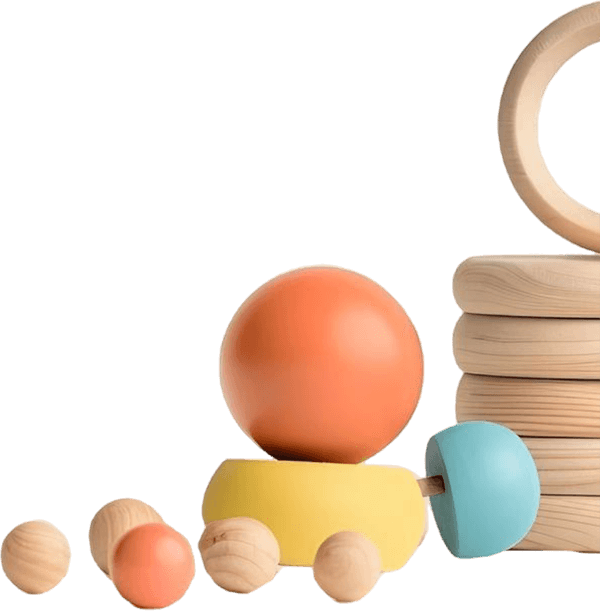
Children discover best when they are actively involved, curious, and having fun. Our play-based curriculum uses purposeful experiences to build important developmental skills: blocks introduce early math, balance, and problem-solving; dramatic play strengthens language, imagination, and cooperation; art and sensory activities support creativity and fine-motor development; and outdoor exploration encourages movement, science discovery, and an appreciation for nature. Through stories, music, games, and hands-on projects, children gain confidence, practice independence, and develop the skills needed for future school success.
Hands-On Learning
Social & Emotional Development
Creativity & Imagination
School Readiness Skills
Assessments: How Learning Is Measured
We monitor each child’s growth through ongoing observations, CDC developmental milestones, and Ages & Stages Questionnaires® (ASQ®). This information helps us plan experiences that support each child’s individual needs and development. Parent-teacher conferences are held twice a year—in the fall and spring—to discuss progress, celebrate growth, and set shared goals.
Daily Schedule
A Day at A New Beginning
Our daily routine provides consistency while remaining flexible to meet each child’s needs.
Morning | 6:00 AM–12:00 PM
Arrival, breakfast, learning centers, circle time, stories, and outdoor play.
Midday | 12:00–2:30 PM
Lunch followed by nap or quiet rest.
Afternoon | 2:30–6:00 PM
Snack, movement, small-group learning, creative activities, free-choice play, and dinner.
Learning happens through meaningful experiences, exploration, and play. Activities are intentionally planned based on each child’s age, interests, and developmental stage while aligning with the Wisconsin Model Early Learning Standards.
Our program provides a balance of child-led exploration, teacher-guided activities, indoor and outdoor play, creative expression, and opportunities to build independence and confidence.
Language & Early Literacy
Storytelling, books, songs, conversations, letter recognition, vocabulary building, and activities that encourage communication.
Creativity & Imagination
Art, music, dramatic play, building, sensory experiences, pretend play, and opportunities for children to express their ideas.
Discovery & Problem Solving
Science exploration, nature experiences, gardening, math activities, puzzles, blocks, STEM activities, and hands-on learning.
Physical Development
Outdoor play, movement activities, games, dancing, climbing, and activities that strengthen both large and small motor skills.
Social & Emotional Growth
Children build problem-solving skills, express emotions, form friendships, develop independence, practice kindness, and work together.
Community & Real-Life Experiences
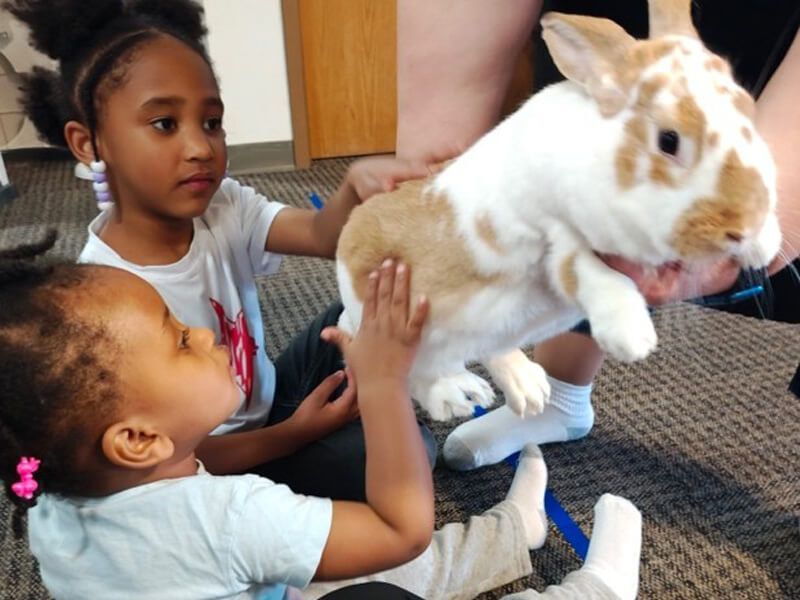
Children learn through real-world experiences like field trips, nature, and community outings that build discovery and connection.